Showing posts with label News. Show all posts

SOY-BASED INK FOR PRINTING

Hanoi Printing has always been conscious of the environmental impact of commercial printing.
One way that helps us to reduce to carbon footprint and bad impact on the environment is to offer our customers to use soy-based inks for your print projects. In comparison to traditional inks, soy-based inks are naturally low in volatile organic compounds (VOCs) and their usage can lower the emissions that cause air pollution.


There are some basic advantages of SOY INK:


Soy Ink is Renewable: Soy ink relies on a compound that can be grown and replenished indefinitely — soy oil

Soy is Less Costly to Grow Than Other Alternatives: Soy beans require relatively small amounts of irrigation and fertilizers. Not only are these low costs an advantage for farmers, but they also minimize the load on the environment.

Soy Ink is Biodegradable: Because soy ink is based on naturally grown soy oil, it can degrade more than four times faster than petroleum-based inks. This simply means that the full life cycle of soy ink is shorter and the total load on the environment is far less.

Less Soy Ink is Required for the Same Amount of Print Outs: soy ink lasts longer for the same amount of printing, cutting down on the total amount of printer ink. Less ink produced, used, and thrown away is always positive for the environment

Soy Ink is Easier to Remove When Recycled: Soy ink is much easier to remove than the equivalent petroleum-based products. Not only does this mean that the resulting recycled paper is higher quality, but it even helps lower the costs of the entire recycling process


Some of our products with Soy- based ink


Soy-based ink is an excellent alternative to petroleum or oil-based inks. Not only is this ink great for the environment and your eco-friendly business agenda, but it can actually be used to produce brighter, more vibrant colors.


OFFSET PRINTING- HOW DOES IT WORK?

Offset printing is the most commonly used printing method today. Over 40% of all print jobs are carried out using offset printing.

WHAT IS OFFSET PRINTING?

Offset printing (also called Offset Lithography), is a printing technique in which the images on a metal plate are transferred to a rubber blanket, then to the printing surface. The printing surface, usually paper, does not come into direct contact with the metal plates. This help prolongs the plate life. Instead, the flexible rubber conforms readily to the print media surface, allowing the process to be used effectively on rough-surfaced media such as canvas, cloth or wood.

HOW DOES IT WORK?

Offset printing works in a simple manner. It uses three cylinders to transfer the image onto the substrate. 
The first cylinder: Plate Cylinder
The second cylinder: Rubber Blanket Cylinder
The third cylinder: Impression Cylinder


The first cylinder is mounted with the printing plate. The image on the printing plate is ‘right’ reading or written with the right side up. The first cylinder is inked and the image transferred or offset onto the second cylinder, which is mounted with a rubber blanket. The image on the second cylinder is thus reversed or becomes ‘wrong’ reading. Finally the image is transferred from the blanket cylinder onto the third cylinder or the substrate. The substrate is mounted on the third cylinder also known as the impression cylinder. The image once again is reversed and becomes ‘right’ reading or right side up in the final printed version.


CLASSIFICATION?

There are two types of offset printing machines in common use for publication today: Sheet-fed offset printing and Web offset printing
In sheet-fed offset printing, individual pages of paper are fed into the machine. The pages can be pre-cut to the final publication size or trimmed after printing. Sheet-fed offset printing is popular for small and medium-sized fixed jobs such as limited-edition books

Sheet-fed offset printing machine
Hanoi Printing’s most noticeable sheet-fed printing machines are the Mitsubishi Diamond 3FR-12 colors  and the Mitsubishi 3FR-8 colors which offer the maximum size of 72 x 102 cm for color printing. 

In web offset printing, larger, higher-speed machines are used. These are fed with large rolls of paper and the individual pages are separated and trimmed afterwards. Web offset printing is more cost-effective for high-volume publications whose content changes often, such as metropolitan newspapers.

Web-offset printing machine
For this type of printer, we own 2 City Line Web Presses originated from Germany which provide capacity to 45,000 sheets/hours. 


PROS AND CONS?

Pros?

Offset printing is usually used for high-volume printing such as with magazines, books, newspapers, brochures, and stationery. While it does add some steps in the process, for massive orders, it makes financial sense for several reasons.

The ink, which fades and then runs out in direct printing methods, is actually controllable with offset printing. The operator can twist some screw keys to adjust the amount of ink flow on the fountain roller. This minimizes the creation of wasted prints with insufficient contrast. The printing plates themselves are easy and fast to make with today’s technology. And the plates each have the potential to run a million impressions or more.

It costs less to produce high quality printing when it is done with offset printing methods. Additionally, the image quality is consistently good as the rubber blanket, on the printing plate, fits itself to the texture of the printing surface, leaving a clean and detailed image every time.

Cons?

The disadvantages are fewer, but they include the tediousness and cost associated with the production of the printing plates and setup. The printing plates are made of anodized aluminum, making them vulnerable to chemical oxidation, so they need some extra care and maintenance. 

But all in all, the advantages outweigh the disadvantages with offset printing, at least when it comes to high-volume printing jobs.


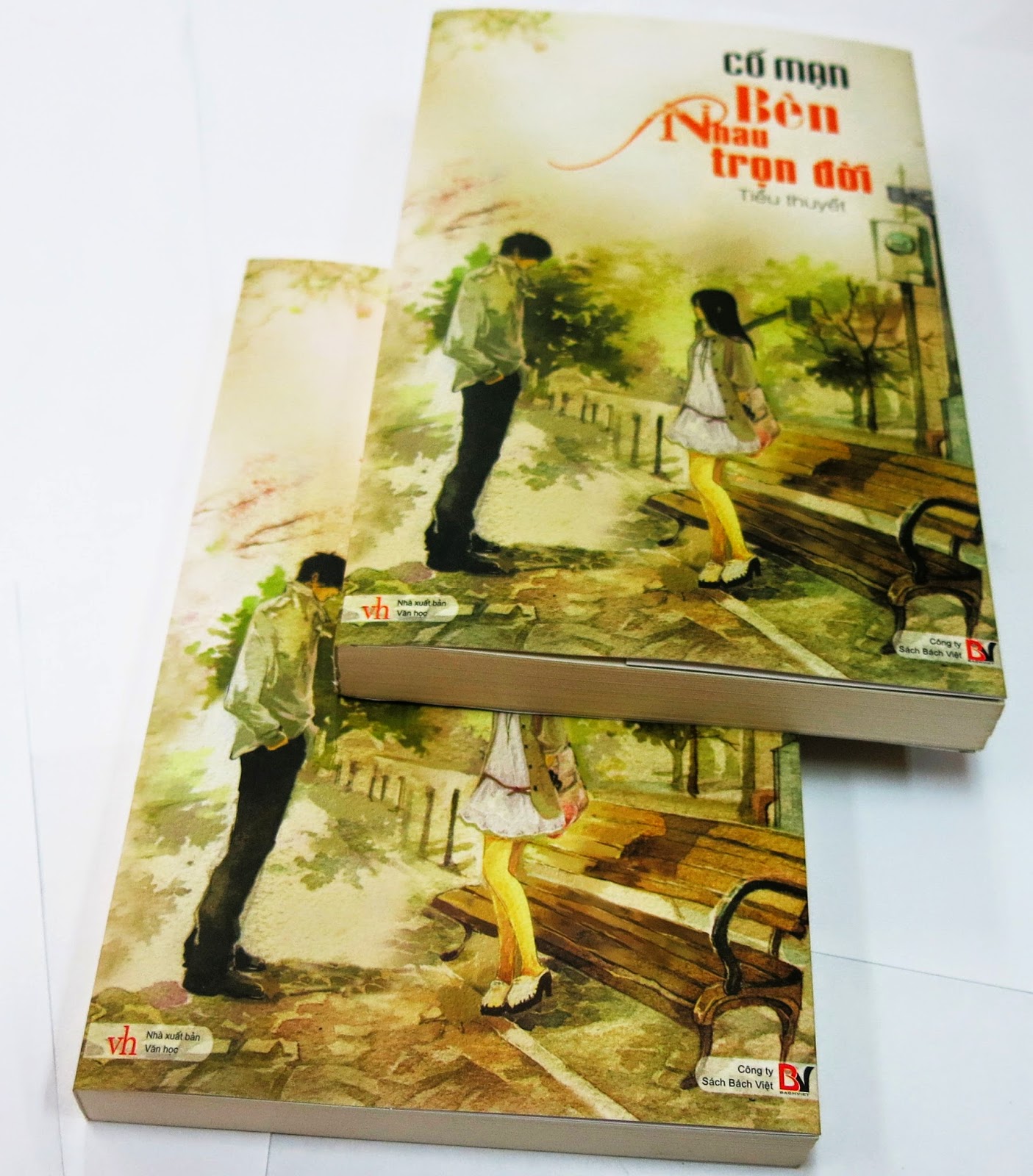
Some pictures of our printed products:


BOOKS HAVE PHYSICAL BEAUTY


In our modern life, things seem to be much easier to download an ebook, a document and manage them in in a strict order in your own folder. People can read online everyday, it is the century of the Internet. But why printed book will never die?


Books have physical beauty! Yes, they do. There's something about holding a book in your hand and the visceral act of physically turning a page that,and which sometimes can't be matched with pixels on a screen. They can be your gifts giving, presents to your friends, parents, children and lovers. 


The books in a built-in bookshelf can reveal who you are. Your favorite books define you, and digital versions don't seem to impart connections that are quite as deep.  "People who need to possess the physical copy of a book, not merely an electronic version, believe that the objects themselves are sacred,"- (Author Joe Queenan, in a Wall Street Journal)


TRIP TO BANGLADESH

Bangladesh is considered as a colorful picture of not only people but also landscapes.
In Bangladesh, Hanoi Printing has had opportunities in taking part in exhibitions, fairs to challenge in the field of pressing.
This is the 3rd time Hanoi Printing has participated in the bidding of the National Curriculum & Textbooks Board (NCTB) in Bangladesh. NCTB is specialized bidding on large projects of education in Bangladesh. Hanoi Printing participated in the bid-opening meeting with the 38/98 plot. In addition, Hanoi Printing had a chance in finding out other competitors in the printing industry.
Well- ending its mission in Bangladesh, Hanoi Printing collected insightful and practical experiences in the field of printing.


HANOI PRINTING TAKES NEW STEP INTO MOZAMBIQUE MARKET

In 2013, Hanoi Printing has opened a new Subsidiary in Mozambique which has made a significant contribution to the company's market extension.
Hanoi Printing Joint Stock Company was in cooperation with the Ministry of Mozambique Education in a project Agreement : Education Sector Pool Fund (FASE) . The agreement was signed between HanoiPrinting, JSC (HNP) and  Ministry of Mozambique Education
The purpose of the project was to Print and Supply Bilingual Education Textbooks for class 1 and 2.

In the framework of the project, two Mozambican experts from Ministry of Mozambique Education paid a visit to Hanoi Printing’s office at No.93 Phung Hung Street , Hoan Kiem District , Hanoi, Vietnam and our Factory : Lot 6B - CN5, Ngoc Hoi Industrial Zone, Thanh Tri District , Hanoi , Vietnam to examine the process of production, estimate the EU standard quality of products, guide and coordinate with HNP designers  in designing their textbooks.
A professional editor at Mozambique Institute of Education under the Ministry of Mozambique Education was sent to Vietnam and worked with experts in designing and writing textbooks’ contents.
Besides, HNP officers have warmly welcomed Mr. Rainde - Chief of Management Department of school equipments in Mozambique.


Project: printing project and supply of bilingual education textbooks for class 1 and class 2 are carried out in the program framework : cooperation and development between the HNP, JSC and Ministry of Mozambique Education as well as between Viet Nam and Mozambique. Simultaneously, This project, which creates a good start in the establishment of HNP’s representative office in Mozambique in October 2014 . Because Mozambique is a new and potential market in the field of printing.


Thanks to their visit, besides work , to show Vietnamese’s hospitality, HNP’s leadership had appointed three staffs to welcome the Mozambican guests to visit Hanoi city and such famous landscapes in Viet Nam such as Ha long bay, Cat Ba beach and Trang An.
Through this contract, HNP had the opportunity to cooperate with Mozambique on solidarity , mutual support for developments between two sides in long-term cooperation .

Mr Pham Huy Minh- GM of Hanoi Printing JSC., standing between
Hanoi Printing Delegation paid a visit to Mozambique